


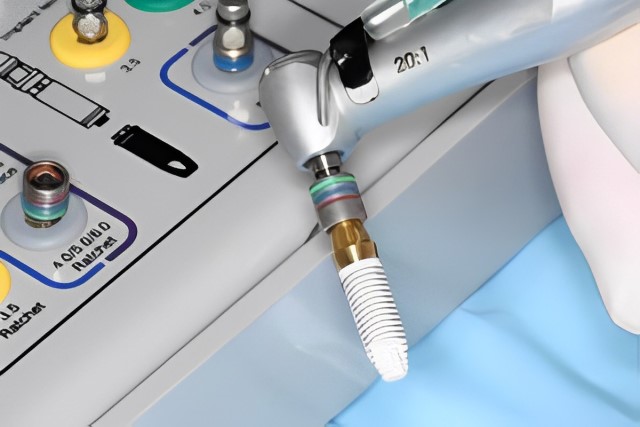
When it comes to rebuilding smiles significantly affected by tooth loss, bone deterioration, or complex oral health challenges, advanced dental implant procedures(opens in new tab) can provide stable, long-term tooth replacement for complex cases. The implant process works by integrating a titanium post directly into your jawbone, restoring the visible tooth as well as the root-level support that can help preserve your jaw over time.
The team behind this work is defined by both experience and specialized training. Dr. Richard Winter(opens in new tab) has completed extensive post-graduate study in dental implant technologies, giving him the technical depth and creative insight to develop complex implant treatment plans for some of the most challenging rehabilitation cases imaginable. He sees people at Hampton Dental Associates(opens in new tab) in Milwaukee, WI, for straightforward treatments like single-tooth replacement to comprehensive full-mouth restorations.
What Advanced Dental Implant Procedures Can Address
Advanced implant procedures are far more than placing a single post and crown. These are multi-step, comprehensive treatment plans designed for people dealing with significant dental challenges, including years of bone loss, multiple missing teeth, bite function issues, or the need for full-mouth reconstruction. They require a coordinated plan that integrates multiple procedures and, in many cases, they give people a degree of dental function they've never had before.
Implants placed as part of these larger plans can replace individual teeth, restore sections of the mouth, and serve as anchor points for dentures(opens in new tab), partials, and bridges(opens in new tab). Each plan is developed specifically around your situation and what will deliver the most functional, natural-looking result over the long term.
Implants and Orthodontic Reconstructive Makeovers
For some people, placing an implant isn't the right first step. If bite alignment or the position of existing teeth isn't where it needs to be, orthodontic treatment(opens in new tab) may need to come first. Dr. Richard Winter carefully evaluates each case to determine whether braces or other corrective measures are necessary before implants are placed, ensuring the final result is both aesthetically balanced and functionally sound.
This kind of coordinated, orthodontic-first planning is especially valuable for those who've dealt with significant smile defects and want a natural-looking, lasting result. It's about more than cosmetics. Getting the bite right from the start is what makes the implant work correctly over the long term.
Bone Grafting
One of the most common barriers to dental implants is insufficient bone in the jaw, but that doesn't automatically mean implants are out of reach.
Bone grafting(opens in new tab) rebuilds or strengthens the jawbone to support an implant, and it's available as needed at Hampton Dental Associates for people whose cases require additional bone support. Hard tissue grafts create the structural foundation that makes long-term implant stability possible, and without that foundation, even a well-placed implant can fail.
Bone Grafting Patient Example
Hard tissue grafts were provided to strengthen jawbone structure as needed. Once the teeth were repositioned into proper alignment, our patient requested premium porcelain crowns and two (2) implants to replace the missing teeth.
A total of eight (8) custom porcelain veneers were applied to the remaining teeth that were precision-matched to the color shading, luminescence, and opalescence of the crowns.
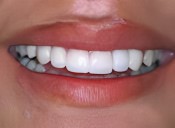
The close-up after photo shows the results of the implants, crowns, and veneer reconstruction. Although other treatment solutions were available (e.g., traditional or all-porcelain bridge), our patient favored the idea that implants would provide bone stimulation properties of real roots, helping preserve and stimulate the surrounding jawbone.
Well-placed and properly maintained implants can last for decades and may outlast some traditional bridges, which typically need replacement every 7 to 10 years.
Bone grafting procedures were used to create the required bone structure for the dental implants.
The subsequent creative use of premium color-matched porcelain veneers, as seen in our final post-treatment after photos, put the finishing touches on this reconstructive dental implant(opens in new tab) tooth replacement treatment.
Our patient succeeded in getting what Mother Nature never provided. She has an extremely attractive smile and now has a degree of dental function that allows her to chew and eat normally... something she was never able to do before treatment.
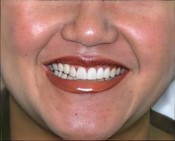
Notice how, in the last photo, the patient's smile is more natural compared to the first photo!
How Implants Compare With Other Tooth Replacement Options
Bridges and traditional dentures address the visible gap, but not the root. Without something stimulating the jaw at the root level, bone in that area gradually deteriorates, affecting your facial structure over time and complicating future dental work. Bridges typically need to be replaced every 7 to 10 years and rely on adjacent teeth for support, adding stress to those teeth in the process.
Dental implants(opens in new tab) are the only tooth replacement option that actually replaces the root itself. That stimulation can help preserve surrounding bone and support a restoration that functions, feels, and looks like a natural tooth. Designed as a long-term solution, implants may last for decades with proper care and maintenance.
Why Choose Hampton Dental Associates for Advanced Implant Care
Dr. Richard Winter has completed extensive postgraduate education in implant, reconstructive(opens in new tab), restorative, and laser dentistry(opens in new tab). In addition to his board certification in implant dentistry, he has earned implant credentials through the American Academy of Implant Dentistry and the International Congress of Oral Implantologists. He has also lectured and published articles on advanced treatment planning, implant rehabilitation, and reconstructive dentistry.
At Hampton Dental Associates, every treatment plan is built around what you actually need. Whether your case calls for bone grafting, orthodontic preparation, custom porcelain restorations, or a full-mouth reconstruction, we have the experience and resources to carry it through from beginning to end. Our goal is to give you a smile and a level of function you can genuinely rely on, and we take that seriously.
Frequently Asked Questions
Am I a Candidate for Implants if My Bone Is Too Thin?
In many cases, yes. Bone grafting is specifically designed to address insufficient bone volume or structure in the jaw. If there isn't enough bone to support an implant right now, grafting can rebuild that structure and create the right conditions for a successful placement. The best way to know what your situation calls for is to come in for an evaluation so Dr. Richard Winter can assess your bone volume and outline a plan that's right for you.
How Long Do Dental Implants Last?
The titanium post that integrates with your jawbone is built as a long-term solution and has the potential to last for decades with proper care. Some people keep their implant posts for a lifetime without ever needing them replaced, though outcomes can vary based on overall health, oral hygiene, and ongoing maintenance.
It's worth knowing that the crown, abutment, and other restorative components may eventually show wear and require repair or replacement over time, even when the post itself remains stable. Think of it as a long-term investment in your dental health rather than a fixed endpoint.
What Sets an Advanced Implant Procedure Apart From a Standard One?
At Hampton Dental Associates, "advanced implant procedures" describes cases that involve more complexity than a straightforward single-tooth placement. These are situations that may call for additional planning, bone grafting, orthodontic preparation, multiple implants, or comprehensive full-mouth rehabilitation.
It's the practice's way of distinguishing cases that require coordinated, multi-step treatment from simpler placements. The goal is always the same: a stable, natural-looking result that works well for the long term. The difference is in how much preparation and coordination it takes to get there.
What Should I Expect During Recovery?
Recovery depends on the scope of your procedure. For less involved placements, most people find it more manageable than expected, with some swelling and tenderness that typically resolves within a few days to a week. Cases that include bone grafting or more extensive reconstruction may involve a longer recovery period.
Hampton Dental Associates offers local anesthesia as well as sedation options for those who want added comfort during the procedure, and we'll help you understand what to expect before you ever sit in the chair. Dr. Richard Winter and the Hampton Dental Associates team will give you clear post-procedure guidance and are available to address any questions or concerns as you heal.
Let's Talk About What's Possible for Your Smile
Missing teeth or a damaged smile don't have to define your daily life. Dr. Richard Winter and the team at Hampton Dental Associates in Milwaukee, WI are here to help you build a plan that fits your needs. Give us a call at 414-464-9021(opens in new tab) or schedule a consultation(opens in new tab) today.
Check out our Dental Blog >>
Read our Patient Case Studies >>
Hampton Dental Associates is proud to offer affordable dentistry programs to help you regain your perfect smile.
Learn more about our affordable dentistry options.