



What are genetic dental defects?
Genetic dental defects are abnormalities of a patient’s oral tissues and bone that are genetically triggered. Oral genetic defects can range from simple to life-threatening, so it’s important to seek treatment if you are exhibiting any of the conditions described here. Our team at Hampton Dental Associates is trained and qualified to treat many of these problems.
What are the most common dental genetic defects?
Cleft Lip and Cleft Palate
The most common dental genetic defect, cleft lip and palate, occurs when the lips or the palate of the patient fail to fuse together during development inside the womb. It can be corrected through cleft and craniofacial surgery.
Cleft lip and palate treatment, especially in children, involves a series of treatments from multi-disciplinary teams. The teams coordinate cosmetic and reconstructive surgery to reposition the jaw, contour the facial bones, and address facial tissue issues. Speech and hearing therapy is needed to ensure normal speech development. These are not defects we treat.
Anodontia and Hypodontia
Hypodontia is the term used when some teeth fail to develop; anodontia is the absence of all the patient’s teeth. These are congenital defects where one or more of the patient’s permanent teeth fail to develop.
Both hereditary conditions affect the bone development of the upper and lower jaw and cause spacing problems in the future. These conditions are treated either by leaving any remaining primary teeth in place and then having the patient wear braces or by using bridges to correct the problem.
Supernumerary Teeth
This hereditary condition is the presence of extra permanent teeth; some of these teeth erupt while others remain in the gums. These extra teeth may appear anywhere in the gums and are irregularly shaped.
The appearance of the extra teeth causes problems with overcrowding, tooth displacement, and pathological complications such as cyst formation. Treatment involves a series of procedures to manage all the effects of the extra teeth, including pain management. Normally there is no pain with extra teeth but not enough room in someone's arch to accommodate them. So in some cases orthodontics and extractions are used to create a more esthetic smile.
Malocclusions
Malocclusions are problems with a patient’s bite that can be attributed to overcrowding of the teeth, missing teeth, or improper jaw alignment. Cases of malocclusions must be treated to prevent their progression to temporomandibular jaw (TMJ) disorders. Malocclusions are often treated with oral surgery, combined with orthodontic treatments, in order to achieve the perfect bite for the patient. Not every mal-occlusion needs to be treated! Only if by leaving it, there could be excessive wear or trauma to the remaining teeth.
Amelogenesis and Dentinogenesis Imperfecta
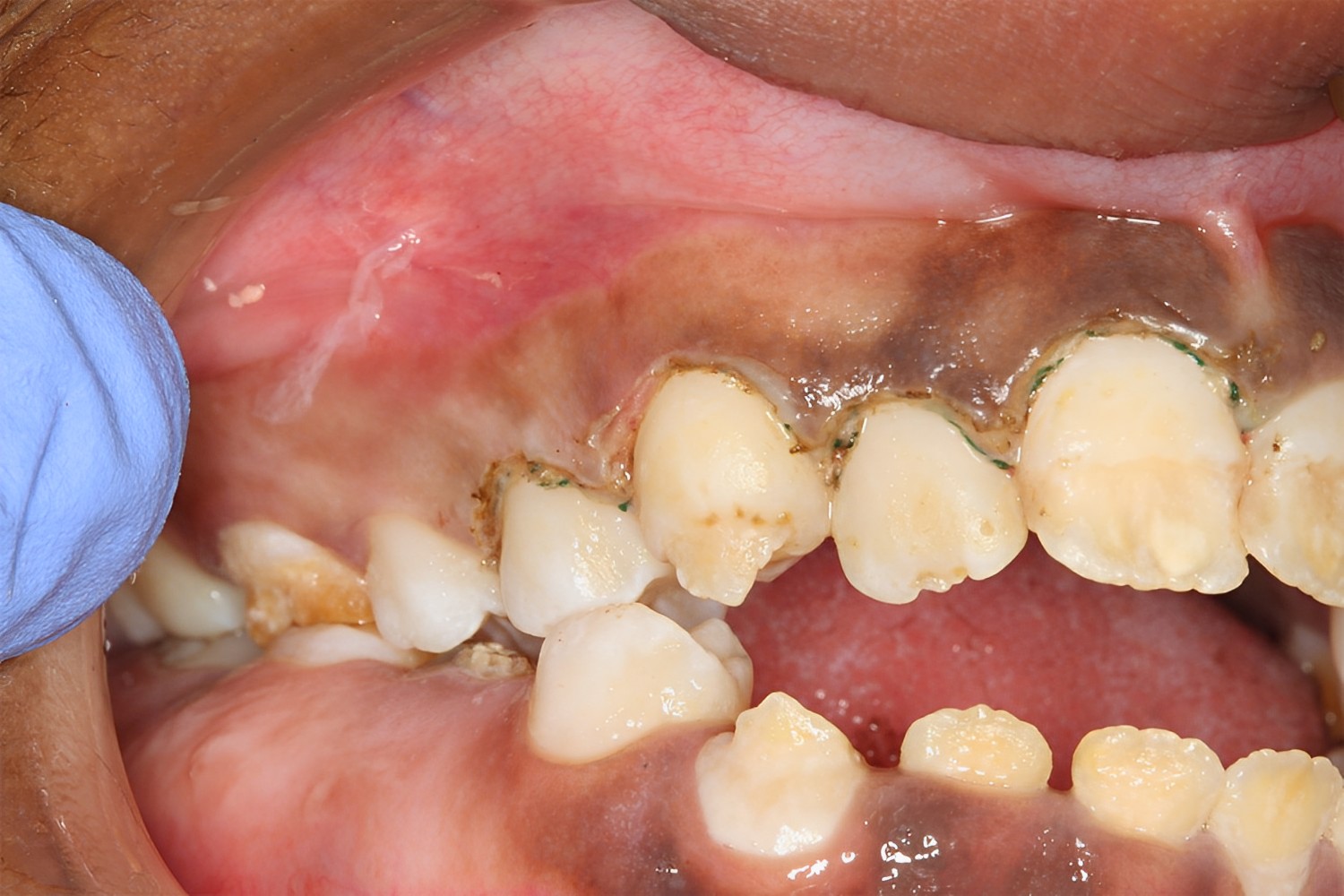
Amelogenesis Imperfecta is the defective formation of the tooth’s enamel, while Dentinogenesis Imperfecta is the defective formation of the tooth’s dentin. These hereditary conditions cause the tooth's surface to flake, leaving it weak, sensitive to temperature changes, and prone to damage. A full crown restoration is recommended to restore the appearance and function of the teeth. Dr. Richard Winter has an amazing article on how he has treated Amelogenesis Imperfecta in his articles list! Please check this out to see how he helped a grade school student avoid being teased and helped her with a beautiful solution to a genetic problem.
Periodontal Disease
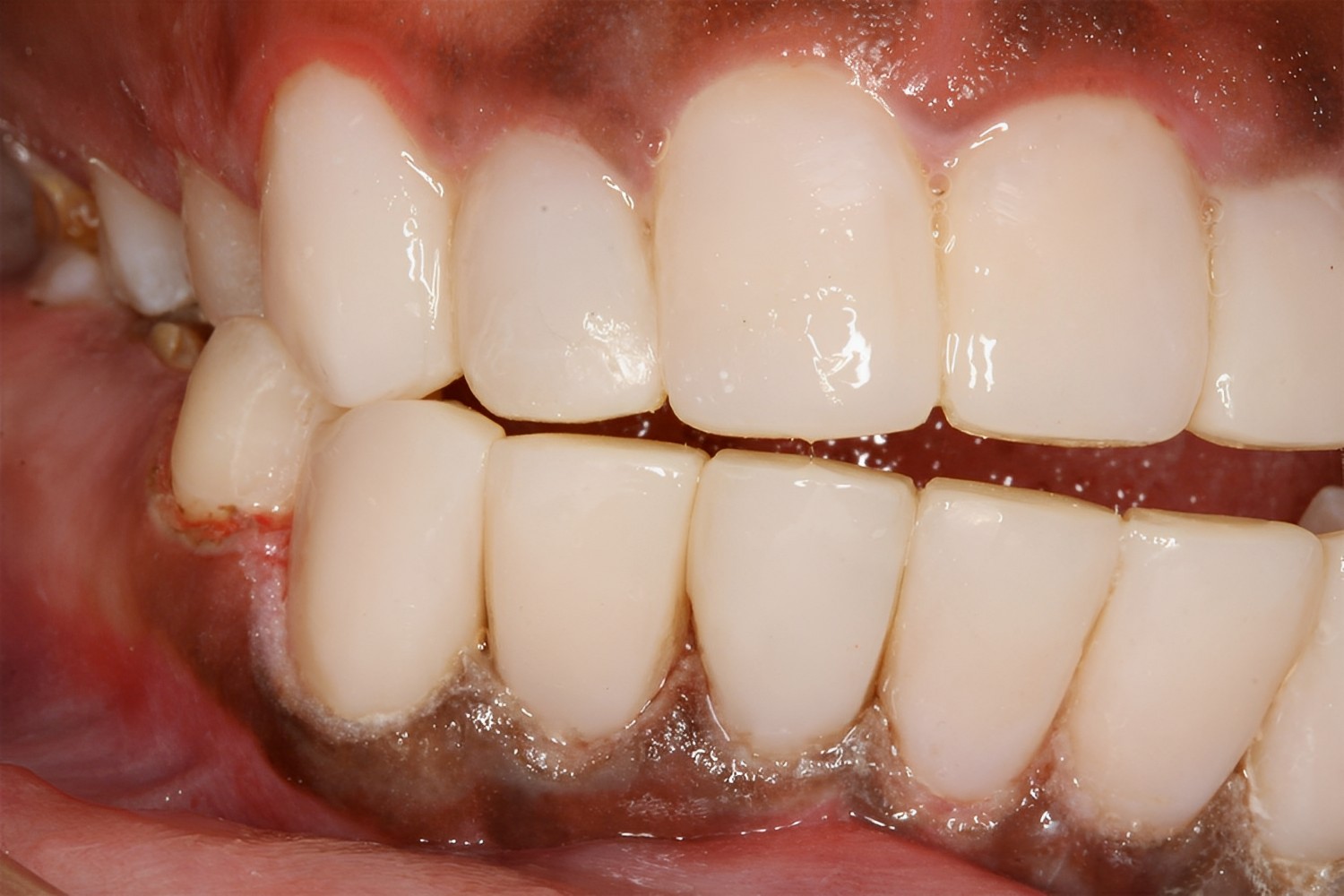
Periodontal or gum disease occurs when bacteria infect the gum tissue, causing inflammation and damage to the tissues that support the teeth. If left untreated, periodontal disease can cause a patient to lose healthy teeth. It can be treated with scaling and root planing to clean the plaque covering the root and surfaces of the teeth. In more serious cases of gum disease, surgical treatment and using dentures or dental implants to replace missing teeth may be necessary. Hampton Dental Associates also has a LIghtScalpel CO2 laser to treat some gingival deformities. It is the most studied laser on the market today and has much better results than other lasers as it is strictly a soft tissue laser and that is what it what it was designed for. Look under articles on MMCL or modified minimal crown lengthening as Dr. Winter is a lecturer on laser dentistry and met Kumar Patel M.D. the inventor of the CO2 laser!!
Gingival Fibromatosis
This genetic condition causes gum tissue overgrowth due to the over-production of collagen. The condition is treated through gingivectomy, a surgical procedure that removes the overgrown gum tissue.
Oral Cancer
Oral cancer appears as tiny white or red spots and sores in any area in the mouth. Although oral cancer is commonly caused by alcohol and tobacco use, genetic predisposition increases the risk of developing oral cancer in most patients.
Those with a genetic predisposition should have regular dental check-ups; this will allow your dentist to detect oral cancer early to increase the chances of successful treatment. Being able to find and remove the lesions before they become cancerous vastly decreases mortality due to oral cancer. In more serious cases of oral cancer, patients may be required to undergo surgery and radiation or chemotherapy treatments.
Read more about a Genetic Defect patient case in Milwaukee, WI.
How We Treat Oral Genetic Defects
Every patient in our practice is given our time, attention, and care. We treat each person individually, taking additional care to ensure our treatment plans accommodate their needs.
Dr. Winter ensures that your treatment plan is bespoke to your needs. This means accounting for your medical history, current oral health, and any concerns you have. We prioritize health, functionality, and risk management while considering cosmetic improvements some patients would like to make.
Read our “Ask the Dentist” column to learn more. You can send Dr. Winter a question or contact our office directly anytime. We are here to help. Please look at his before and after photos and articles!
What People Say About Us!
"I have scheduled with Hampton Dental for years. They are quit the Professional Team. They are always willing to educate & explain the why’s with regards to the services & procedures that you are having done. I always feel confident with each appointment, that things are going to be completed with the utmost care & professionalism."
– P.R. 9/2021
Click here to read more reviews.
Why Choose Hampton Dental Associates for Oral Genetic Defects
Oral genetic defects can affect tooth development, appearance, strength, and function, so treatment often requires careful planning and a personalized approach. Hampton Dental Associates has served Milwaukee families for generations and provides comprehensive dental care designed around each patient's unique needs.
Dr. Richard Winter has extensive experience in complex restorative and reconstructive dentistry and is a Master in the Academy of General Dentistry. He develops individualized treatment plans that may combine restorative, cosmetic, or implant dentistry, as appropriate, to improve both oral function and appearance while allowing treatment to progress at a pace that works for the patient.
Frequently Asked Questions
What Dental Issues Are Hereditary?
Oral health is not always inherited. For example, if you are prone to gum disease, that does not mean your child will have it by default. However, some hereditary conditions may cause oral health complications, as is often the case with congenital defects that affect oral development.
Cleft lip and palate, alveolus defects, and tumor conditions are common examples of hereditary dental issues.
What Is The Most Common Congenital Defect That Affects the Mouth?
Cleft lip and palate (CL/P) is highly common in children. About one out of every 1,600 babies is born with a cleft lip and palate; one out of every 2,800 has a cleft lip without a cleft palate; about 1,700 babies are born with only a cleft palate.
Certain genetic syndromes, such as Down syndrome and Pierre Robin, can cause the defect.
Are All Oral Genetic Defects Hereditary?
Many conditions are genetically triggered, but that does not mean they are inherited. Everyone’s body is unique, and their own DNA can cause certain conditions to “activate” based on a variety of factors. The field of epigenetics looks closely at how certain behaviors and environmental factors cause genes to develop and change.
How are oral genetic defects diagnosed?
Diagnosis usually starts with a dental exam and a review of your medical and family history. Dr. Winter may also use X-rays, photographs, scans, or other tests to evaluate how your teeth, gums, and jaws developed.
At what age are oral genetic defects usually discovered?
Some are identified in childhood, when the teeth or jaws begin to develop, while others may not become apparent until the permanent teeth erupt or later in adulthood. The timing depends on the specific condition and how it affects oral development.
Can oral genetic defects become more noticeable with age?
Yes. Some conditions become easier to recognize as permanent teeth erupt, the bite changes, or the teeth experience years of wear. Problems with tooth strength, spacing, alignment, or jaw development may also become more noticeable over time.
Can an oral genetic defect affect both baby teeth and permanent teeth?
Yes. Certain genetic conditions can affect both primary and permanent teeth, although the severity may differ. Dr. Winter can monitor development as new teeth erupt.
Can oral genetic defects affect only one tooth?
Yes. Some developmental defects may affect a single tooth, while others involve several teeth or the entire dentition. The pattern depends on the underlying condition.
Can genetic conditions affect the way my jaw develops?
Yes. Some genetic conditions can influence the size, shape, or position of the upper or lower jaw. This may contribute to bite problems, facial imbalance, or difficulty chewing.
Can oral genetic defects affect facial symmetry?
They can. Differences in jaw growth, missing teeth, or abnormal tooth development may affect facial balance and proportions. Treatment may focus on improving both oral function and appearance.
Can oral genetic defects cause problems with chewing?
Yes. Missing teeth, weak teeth, abnormal tooth shape, or bite problems can make it harder to bite and chew comfortably. Restorative or reconstructive treatment may help improve function.
Can oral genetic defects affect speech?
Yes, depending on the condition. Missing teeth, jaw differences, or abnormalities involving the palate or tooth position can affect how certain sounds are formed.
Can oral genetic defects make it harder to keep my teeth clean?
Yes. Crowding, unusual tooth shapes, gum overgrowth, or difficult-to-reach areas may make brushing and flossing more challenging. Dr. Winter may recommend a more customized home-care routine and more frequent professional cleanings.
Should my children be evaluated if I have a genetic dental condition?
It can be helpful to mention your dental condition and family history to your child's dentist. Early monitoring may help identify developmental changes sooner and plan treatment appropriately, if needed.
Can a genetic dental condition skip generations?
Some inherited dental conditions can appear to skip generations, depending on how they are passed down. A family history does not always mean every generation or every family member will be affected.
Can my dentist tell whether a dental problem is genetic?
A dentist may recognize patterns that suggest a genetic or developmental cause based on your examination, dental history, and family history. In some cases, they may recommend additional evaluation or genetic testing to confirm the cause.
Will I need X-rays to evaluate an oral genetic defect?
Often, yes. Dental X-rays can show missing or extra teeth, tooth development, root structure, bone levels, and jaw relationships that a visual exam can't fully evaluate.
Can treatment for an oral genetic defect improve both appearance and function?
Yes. Treatment is often designed to address both concerns. Depending on the condition, care may improve chewing, bite stability, tooth protection, speech, and the overall appearance of the smile.
Can dental implants replace teeth that never developed?
Yes, in appropriate adult patients with adequate bone and healthy surrounding tissues. Dental implants may replace congenitally missing teeth after jaw growth is complete.
Can bridges replace congenitally missing teeth?
Yes. A dental bridge may be an option when one or more teeth never developed, depending on the condition of the surrounding teeth, the bite, and the location of the missing tooth.
How many dental visits will I need?
The number of appointments depends on the condition's complexity and the treatments involved. A simple restoration may require only a few visits, while comprehensive reconstructive treatment may take several appointments over a longer period.
Is treatment for oral genetic defects painful?
We perform treatment with patient comfort in mind and use local anesthesia when necessary. You may experience temporary soreness or sensitivity afterward depending on the procedure.
Is there a recovery period after treatment?
Recovery depends on the type of treatment. Procedures such as bonding or some crowns may require little to no downtime, while implants, gum procedures, or more extensive reconstruction may involve a longer healing period.
Call 414-464-9021 for information on any of our services.
Check out our Dental Blog >>
Read our Patient Case Studies >>
Hampton Dental Associates is proud to offer affordable dentistry programs to help you regain your perfect smile.
Learn more about our affordable dentistry options.