

Jawbone loss and complicated bone loss issues are becoming more and more prevalent. Many segments of young and older adult populations are experiencing issues that didn’t seem to exist several years ago.
At Hampton Dental Associates, we offer reconstructive surgery in the form of bone grafting for complicated cases of jawbone deterioration in Milwaukee.
Signs of Jawbone Loss
Jawbone loss often develops gradually, and many people don’t realize it’s happening until noticeable changes occur. Common signs may include:
- Loose or shifting teeth
- Gum recession
- Changes in your bite
- Difficulty chewing or discomfort when biting down
- Increased spacing between teeth or new gaps forming
- Jaw pain or tenderness, especially near missing teeth or infected areas
- Facial changes such as a more “sunken” appearance around the mouth or jawline
- Dentures that no longer fit properly
- Frequent gum infections or bleeding
- Persistent bad breath or a bad taste that doesn’t go away
- Tooth loss or missing teeth
What Is Bone Grafting and Reconstructive Surgery for Jawbone Deterioration?
Bone grafting and reconstructive surgery are advanced dental procedures used to restore areas of the jawbone that have weakened or deteriorated due to tooth loss, gum disease, infection, or trauma. Bone grafting involves placing natural or synthetic grafting material into areas where bone has been lost. Over time, this material integrates with the existing bone and stimulates the body’s natural ability to regenerate new, healthy bone.
Reconstructive jawbone surgery may be recommended when bone loss is more extensive and affects the stability of teeth, facial structure, or the ability to place dental implants. These procedures are designed to rebuild strength, restore proper jaw function, and create a stable foundation for long-term oral health. When successful, bone grafting and reconstruction can help preserve remaining teeth, improve facial support, and allow for predictable tooth replacement options such as dental implants.
Other Treatment Options for Jawbone Loss
awbone loss can worsen over time if left untreated, but several treatments can help stop progression and restore support. The best option depends on the cause, severity, and your long-term goals (such as saving teeth or replacing missing ones).
- Periodontal (Gum Disease) Treatment: If gum disease is causing bone loss, treatment may include deep cleanings (scaling and root planing), antibacterial therapy, and ongoing periodontal maintenance to reduce infection and protect remaining bone.
- Guided Tissue Regeneration (GTR): This procedure supports bone regrowth by placing a protective membrane between gum tissue and the bone, allowing the jawbone and supporting tissues time to regenerate.
- Dental Implants (Often with Bone Restoration): Dental implants replace missing teeth and can help prevent further bone loss by stimulating the jawbone. If bone loss is significant, grafting or other regenerative procedures may be needed before implant placement.
- Tooth Replacement Options: Replacing missing teeth may help slow additional bone loss. Options include dental implants, bridges, dentures, or implant-supported dentures for added stability and bone support.
- Treating Infection or Damage: If bone loss is caused by infection, abscess, or cysts, treatment may involve root canal therapy, extraction, removal of infected tissue, and possibly bone grafting afterward.
- Ongoing Prevention: Good oral hygiene, routine dental visits, and avoiding tobacco are key to slowing bone loss and supporting successful healing after treatment.
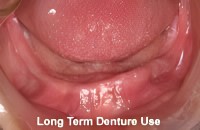
Customary Bone Loss
Dentures: A Functional Paradox
Long term denture wearers, as a group, are discovering that early, sensible choices of dentures or partials are now causing severe loss of bone height and width within the upper or lower jaw.
Conscientious denture wearers who obtained frequent relines or denture replacements through the years are now facing the prospect of having near total resorption that can prevent the use of replacement dentures or implant devices.
Dentures typically cause up to 70% bone loss within the first several years of use. Partials can have similar effects. Denture prosthetics are designed to rest or ride on gum tissue and do not provide direct stimulation to the jawbone as normal teeth or implants do.
While many denture wearers perceive a loss of gum tissue as they continue to wear denture products, there is a misconception that relining a denture is a common fix. Relines do a wonderful job of creating a new snug fit, but in reality are compensating for the loss of underlying bone and loss of gum tissue volume.
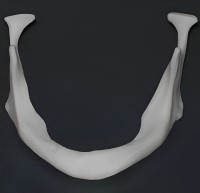
Gum Disease & Jawbone Loss In Milwaukee
Adult gum disease is also responsible for complex bone loss that can accrue to the loss of teeth (extracted or otherwise) and the disease process operating directly on the connective tissues (periodontal ligaments) and jawbone.
Effective management of adult gum disease has historically been difficult. The abnormally high incidence rate in adults (80%) is indirectly caused by inadequate oral health habits, untimely treatments of common dental problems that later create the environment for disease, insurance factors and financial considerations.
To combat the effects of periodontitis, we offer bone grafting and reconstructive surgery as a jawbone deterioration treatment at our Milwaukee dental facility.
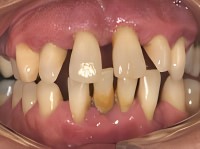
Recession follows Bone Loss
Many older adults, members of the current baby boomer generation, are now treating gum disease conditions that have accrued due to their tendency to focus on assuring dental health maintenance for their families first and delaying routine treatments for themselves.
Periodontitis, which typically progresses from untreated or inadequately treated gingivitis, can cause wholesale destruction of jawbone integrity very quickly. Fortunately, thanks to Mother Nature, different segments of our jawbones possess different densities, enabling most gum disease patients to benefit from advanced prosthodontic bone grafting technologies and creative acrylic or titanium based fixed or removable prosthetics.
As a leading dentist in Milwaukee, we offer a variety of treatment options to address gum disease and restore the health of your jawbone.
Cumulative Extractions Cause Malocclusion – Super Eruptions (jawbone loss)
Untreated tooth extractions are discussed on the Normal Bone Loss page. The abuse of extraction dentistry accelerates immediate bone loss in the extraction site(s) and almost routinely impacts healthy bone of adjacent teeth. Patients oftentimes report beginning events of shifting teeth as the resorption of bone spreads to adjacent tooth roots and connective tissues.
Extreme abuse of extracting teeth also caused severe disruptions in the occlusal plane. Super eruptions of opposing teeth can also exacerbate a bad bite. Normal canine guidance fails and a mismatch between the biting surfaces of our upper and lower teeth can exert lateral or sideways forces on teeth causing more teeth to shift, loosen and sustain more bone loss.
As a leading dentist in Milwaukee, we are experienced in treating severe malocclusions and super-eruptions. We will evaluate your condition and develop a treatment plan that restores the overall health of your jawbone.
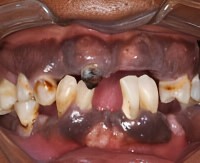
Non-opposed Teeth
Orthodontic Failure
Inadequate or unsuccessful orthodontic treatments can also cause, for adult patients, bone loss events. Orthodontic needs that were never treated can cause a variety of malocclusion issues especially when significant conditions of underbite, overbite or flared teeth exist.
Orthodontic concerns that appear to be benign during teenage or young adult years can become a destructive force with the dentition of a middle aged or older adult. Teeth can shift, rotate, tilt, become wobbly, grind away on opposing tooth enamel or strike opposing gums and jawbone (including the palate).
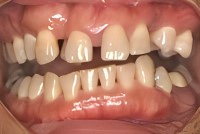
Secondary Tissue Loss
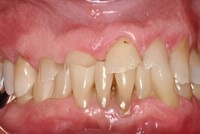
The last picture in our series shows what can happen to adult teeth and bite, over several years, when routine orthodontic alignment issues (easily addressed during our developmental years) are repeatedly postponed creating treatment needs that are complex and unnecessarily costly.
The bone loss on the lower, central anterior teeth was caused, for the most part, by the super eruption process that occurred due to a defective occlusal plane (upper and lower jaws don’t line up properly).
In this extreme example, the lower teeth are actually “hitting” the upper jaw gum tissue, further complicating the loss of tissue on the upper arch.
Why Choose Hampton Dental Associates?
At Hampton Dental Associates, you’ll receive care backed by exceptional experience and advanced training. Dr. Richard Winter (University of Minnesota School of Dentistry, 1988) has earned the Mastership Award in the Academy of General Dentistry, requiring over 1,000 hours of continuing education, along with some of the highest certifications in implant dentistry, including ABOI/ID Diplomate status, a distinction that represents the top level of competence in the field.
Dr. Winter is also a respected leader in dentistry, having lectured across the U.S. and Canada, published professional articles, and been named a Top Dentist in Milwaukee for more than 10 consecutive years. With advanced credentials in implant and laser dentistry and a strong reputation for excellence, Hampton Dental Associates is proud to provide expert, personalized care you can trust.
Jawbone Deterioration Treatment In Milwaukee, WI
As a trusted dentist in Milwaukee, we are committed to providing the highest standard of care. If you are suffering from complicated bone loss, call 414-464-9021 for information on any of our services.
Check out our Dental Blog >>
Read our Patient Case Studies >>
Hampton Dental Associates is proud to offer affordable dentistry programs to help you regain your perfect smile.
Learn more about our affordable dentistry options.